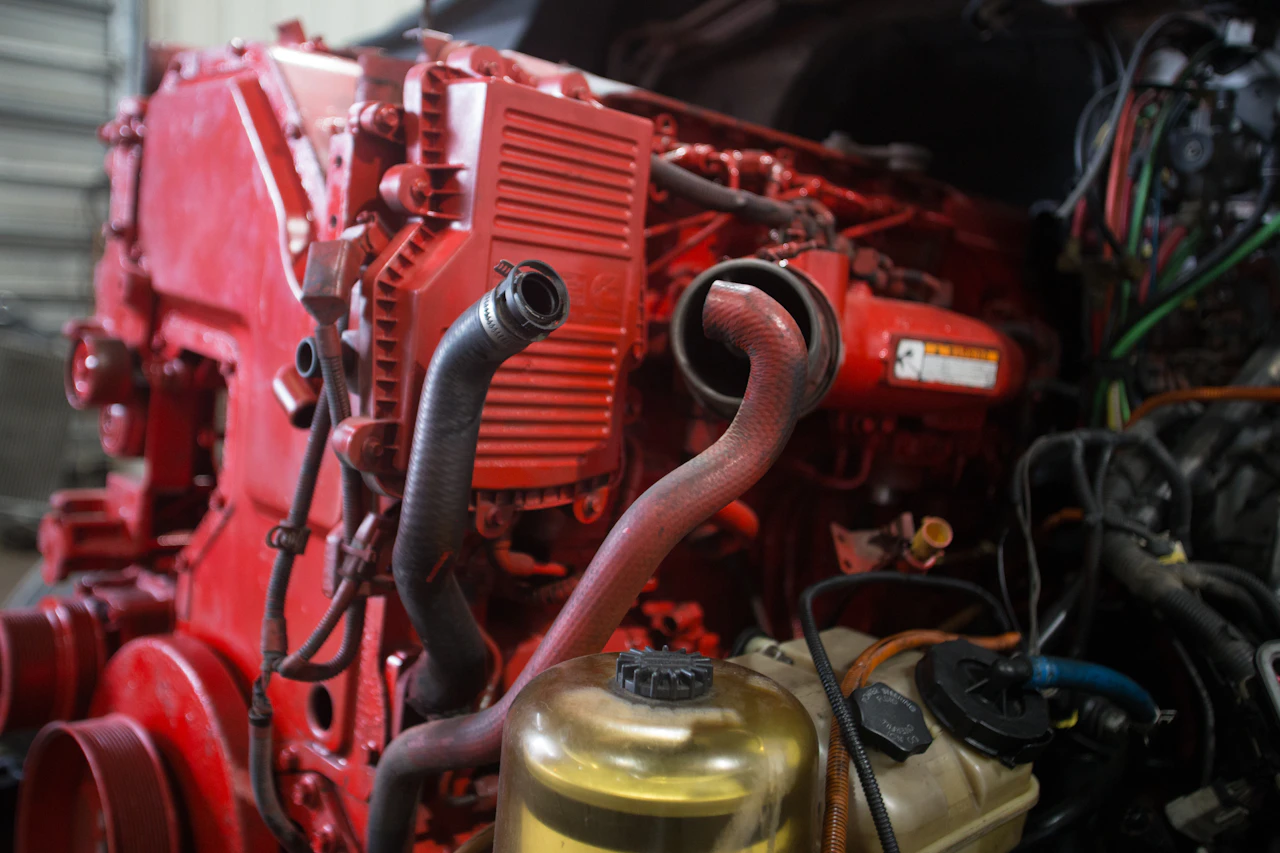
Your Freightliner starts, idles normally, and may not make a single suspicious noise—yet suddenly, available engine power drops. That's the frustrating reality of a Cummins engine derate: the problem isn't always something you can see under the hood.
A derate often starts with a control, emissions, or sensor fault rather than catastrophic engine damage. Proper diesel engine repair begins by identifying why the ECM commanded the power reduction instead of replacing parts based on symptoms alone.
Why Does a Cummins Engine Derate When Nothing Seems Wrong?
A modern Cummins engine constantly monitors operating conditions through sensors and electronic controls. When the engine control module detects certain faults or operating conditions, it can limit performance to protect the engine, aftertreatment system, or emissions controls.
That means the truck may still run smoothly while the ECM restricts torque, speed, or available power.
Common areas worth checking include:
- Active and stored diagnostic fault codes
- DPF soot loading or regeneration problems
- DEF quality, level, or delivery faults
- SCR system performance
- NOx or temperature sensor faults
- EGR system problems
- Boost and intake-air faults
- Coolant or engine-temperature sensor readings
- Wiring and connector problems
- Low fluid or pressure conditions
- Repeated faults that were cleared without being repaired
The first goal of Freightliner derate diagnostics should be determining what condition triggered the ECM response.
Should You Check Fault Codes Before Replacing Anything?
Yes. Pulling diagnostic codes should usually happen near the beginning of the troubleshooting process.
A dashboard warning tells you that the truck detected a problem. It doesn't automatically tell you which component needs replacement. A diagnostic trouble code can direct the technician toward a system, circuit, sensor, or operating condition that needs further testing.
That distinction matters. A code involving a sensor reading might be caused by the sensor itself, but it could also result from damaged wiring, a connector problem, abnormal system operation, or another component feeding inaccurate conditions to that sensor.
Clearing the code without correcting the cause can make a diesel engine derate disappear temporarily, only for it to return once the ECM sees the same fault again.
Can the DPF Cause a Cummins Engine Derate?
Yes. The diesel particulate filter captures soot and particulate matter from the exhaust stream, and that material must periodically be burned away through regeneration.
If normal regeneration cannot occur, soot loading can continue increasing. Sensor failures, unsuitable operating conditions, or problems elsewhere in the aftertreatment system can also interfere with the process.
Depending on the fault and its severity, you may see warning lights, regeneration requests, reduced power, or a progressively more restrictive DPF derate.
A forced regeneration may be appropriate in certain situations, but it should not become an automatic response to every aftertreatment warning. If a failed sensor or another underlying problem prevented regeneration in the first place, that problem still needs to be found.
Operators can review available Cummins engine resources when identifying the specific engine and emissions configuration installed in a fleet vehicle.
Can DEF or SCR Problems Reduce Engine Power?
They can. Selective catalytic reduction uses diesel exhaust fluid to help reduce nitrogen oxide emissions in the exhaust stream.
The system depends on more than simply having DEF in the tank. Sensors, dosing components, wiring, fluid condition, and SCR performance all contribute to proper operation.
A truck can therefore have a full DEF tank and still develop a DEF system fault.
Check for contamination, incorrect fluid, crystallization around accessible components, damaged wiring, sensor faults, and diagnostic codes related to dosing or SCR efficiency. The exact testing procedure should follow the engine and aftertreatment configuration rather than relying on visual inspection alone.
Which Sensors Can Make a Healthy Engine Feel Derated?
Sensor problems can be particularly confusing because the underlying mechanical system may still function.
Modern engine controls rely on data for temperature, pressure, airflow, exhaust conditions, and aftertreatment operation. If that information falls outside expected parameters—or the ECM receives unreliable information—it may respond with warnings or reduced performance.
That makes Cummins fault code diagnostics more useful than simply asking whether the engine sounds bad.
Technicians may need to compare sensor readings with actual operating conditions. A reading that is technically present but physically unrealistic can be just as important as a completely failed sensor.
Can Wiring Cause an Intermittent Freightliner Derate?
Absolutely.
Heavy-duty trucks operate through vibration, moisture, temperature swings, road debris, salt, and thousands of kilometres of use. Wiring harnesses and electrical connectors live in that same environment.
A loose connection, damaged wire, corrosion, poor ground, or intermittent circuit can generate faults that appear and disappear. The truck may operate normally after being restarted, making the issue seem resolved until vibration or temperature causes the electrical fault to return.
For intermittent engine derate complaints, technicians should consider wiring and connector condition alongside sensors and mechanical components.
Repeatedly replacing the component named in a fault description without checking its circuit can waste both time and parts.
Could an Engine Protection Fault Cause the Derate?
Not every derate starts in the emissions system. Engine protection strategies may respond to conditions involving coolant temperature, oil pressure, intake or boost performance, and other monitored operating parameters.
A genuine low-pressure or high-temperature condition deserves immediate attention because continuing to operate the truck could cause mechanical damage.
An inaccurate sensor reading can sometimes create similar symptoms. That's why technicians need to verify actual operating conditions rather than assuming the ECM is either completely right or completely wrong. Good heavy-duty engine diagnostics compare electronic data with physical testing.
Why Do Recurring Derates Need More Than a Code Reset?
A reset doesn't repair a failed component, damaged wire, restricted system, or underlying operating condition.
If the same Freightliner repeatedly returns with similar warning lights or reduced-power complaints, review its previous repair history. Look for recurring fault codes, replaced sensors, failed regenerations, wiring repairs, DEF-related issues, and operating conditions present when each event occurred.
Patterns matter in fleet maintenance.
If several trucks experience similar failures, the common factor could involve duty cycle, maintenance practices, operating environment, or shared components. If one truck alone repeatedly derates, its individual repair history deserves closer scrutiny.
What Should Freightliner Fleets Check During Routine Maintenance?
Derate prevention fits naturally into preventive maintenance because many developing problems leave clues before a truck loses power.
Build these checks into your fleet routine:
- Review active and inactive fault codes rather than waiting for a major warning.
- Watch for repeated regeneration complaints or increasing regen frequency.
- Inspect visible aftertreatment wiring and connectors.
- Monitor DEF condition and consumption.
- Investigate coolant, oil-pressure, or temperature irregularities promptly.
- Record recurring driver complaints, even when the truck later operates normally.
- Keep repair histories tied to individual unit numbers.
- Address warning lights before returning trucks to demanding routes.
Fleet inspections should also account for safety-related defects outside the engine system. Liberty's guide to DOT inspection preparation explains additional areas fleets should review before an inspection.
Do All Freightliner Trucks Use the Same Cummins Engine?
No. Engine availability varies by Freightliner model, configuration, model year, and application.
That matters when troubleshooting because diagnostic procedures, aftertreatment layouts, sensors, and maintenance requirements can differ between engines. Current and previous Freightliner models have used different Cummins powertrain options alongside other engine choices.
Fleet managers can review Freightliner truck platforms when identifying the vehicle configuration before developing a maintenance or diagnostic plan. Some Freightliner applications are offered with Cummins powertrains, but the exact engine should always be confirmed for the individual truck.
How Should Fredericksburg Fleets Respond to a Derated Truck?
Start by documenting exactly what happened.
Record the warning lights, dashboard messages, engine behaviour, operating conditions, recent repairs, and whether the problem appeared during acceleration, highway operation, regeneration, or startup. Don't erase potentially useful diagnostic information before the truck is inspected.
For fleets operating around Fredericksburg, Stafford County, and the I-95 corridor, a derated truck can quickly disrupt schedules. Fast diagnosis matters, but accurate diagnosis matters more.
A methodical Cummins engine troubleshooting process can distinguish an aftertreatment issue from an electrical, sensor, cooling, airflow, or mechanical fault before unnecessary parts are installed.
Get Cummins Engine Derate Problems Diagnosed in Fredericksburg, VA
A Freightliner that suddenly loses power without an obvious mechanical failure is giving you a symptom, not a complete diagnosis. Fault codes, live operating data, aftertreatment condition, wiring, fluid systems, and repair history all help uncover why the ECM commanded the derate.
Liberty supports commercial trucks and fleets. If a Cummins-powered unit is repeatedly derating, schedule an inspection before a recurring warning turns into additional downtime.


